
Upgrading from Hand Tape to a Carton Tape Sealer.
Hand taping slowing you down? Discover the benefits of upgrading to machine tape and a carton tape sealer for faster, more consistent sealing.

Hand Tape Slowing Your Operation? Here's When to Upgrade to a Carton Sealer
Manual tape application may suit small operations, but as your business grows, it becomes increasingly inefficient, costing you time, money, and consistency. If you are packing a different size box every time, hand taping may still be the best fit for your business. However, if you are using consistent sized cartons, recognizing when it's time to upgrade to machine tape and a carton tape sealer will help you streamline workflows, improve package integrity, and keep you out of a sticky situation.

Key Tipping Points
Not sure if it's time to make the switch? Here are the signs that manual tape application is holding your operation back.
Increased Volume
As your volume increases, you may notice that packing lines are slowing down at the taping stage because your team is struggling to keep up with demand.
Labour Inefficiency
Employees are spending a significant portion of their time on repetitive sealing tasks instead of higher-impact work.
Worker Fatigue and Injury
Manual tape application requires repetitive motions that can cause strain and fatigue, increasing the risk of workplace injuries. If physical strain is a concern, it's time to consider machine tape and a carton tape sealer.
Inconsistent Sealing
Uneven tape application will result in an increase in weak seals, or damaged shipments. One advantage of upgrading to a taping machine is that your tape application becomes much more measurable.
Increased Material Waste
Manual tape applications often result in overuse of tape. Making the transition will be more cost-effective in the long term.

Understanding Your Upgrade Options
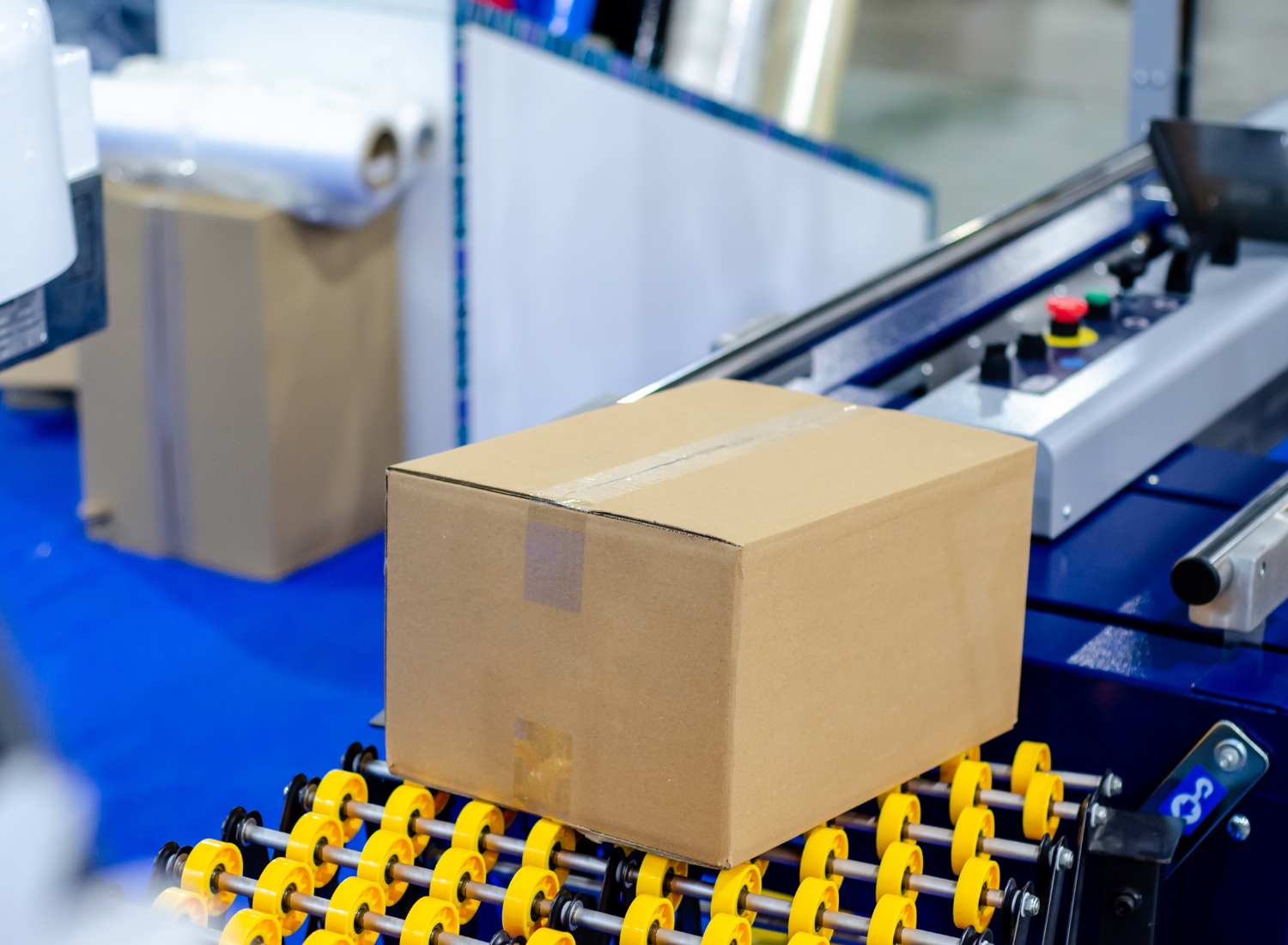
A carton tape sealer is designed to automatically apply adhesive tape to the top, bottom, or both sides of your cartons at once. It streamlines the process, making it faster, more uniform, and less physically demanding for workers. Depending on your operation, there are a few options to choose from; each designed to fit different packing volumes, box sizes, and workflow setups. Depending on the model, some taping machines will require an operator to place the carton on the rollers, while others run continuously, adjusting box sizes with minimal input.
Uniform Semi-Automatic Carton Sealer
Best for: Production lines with one or two consistent box sizes or uniform cases.
Where it fits: Low to moderate volume operations where you are looking to speed up your packing process without full automation.
- How it works: A machine operator folds the flaps of the box and feeds it into the machine. The carton tape sealer then applies the tape to the top and bottom of the box offering consistent and precise sealing every time.
- Limitations: This taping machine is not suitable for operations handling boxes of varying sizes.
Random Semi-Automatic Carton Sealer
Best for: Multiple box sizes in the same workflow.
Where it fits: Businesses scaling SKU counts, in operations with variable order sizes, or if your current process involves constantly stopping to adjust equipment.
- How it works: The operator feeds boxes into the machine, and it will automatically adjust to different box sizes with minimal human intervention.
- Limitations: Not ideal for high-volume lines where fully automatic sealers perform more efficiently.

Automatic Carton Sealers
Best for: Higher-volume, conveyorized operations.
Where it fits: Higher throughput environments or in operations investing in end-of-line automation where the goal shifts from assisting manual labour to removing it from the process.
- How it works: Boxes move through the machine via conveyor. Flaps can be folded automatically, and sealing happens without operator involvement.
- Limitations: Higher upfront cost and setup complexity, less flexibility for varying box sizes unless paired with advanced systems.
Case Erector with Integrated Sealing
Best for: High-volume, fully optimized operations.
Where it fits: Large-scale distribution where you want box building fully automated.
- How it works: Flat cartons are run through the machine and formed automatically. The bottom is then sealed and ready for packing. Once the box is packed it continues downstream for top sealing.
- Limitations: Among carton tape sealing solutions, this is the highest upfront investment and system complexity. This also demands reliable upstream and downstream processes and ongoing maintenance and technical support.
The Bottom Line
If you're scaling your business, struggling to keep up with demand, or wasting time and materials, the question isn't if you should upgrade, but when, and how advanced the automation needs to be.
It's also important to note that your choice of sealing method matters just as much as the machine you use. The right combination of equipment and tape ensures you get the most performance from your carton tape sealing system. That's why Whitebird works with trusted partners like IPG and 3M delivering dependable carton sealing with consistent performance, strong adhesion, and clean, professional application every time. We offer a wide range of machine tape and paper tape options from general purpose solutions to cold temperature adhesives ensuring consistent performance across different environments and applications.
"Most companies delay upgrading because they view it as a capital expense, when in reality it is a labour and efficiency decision that can determine operational success."
Whitebird, helping your business deliver. Connect with our experts to find the right solution for your operation or call us at 800-263-2128.


800-263-2128

Copyright ©2026 Whitebird, All Rights Reserved.